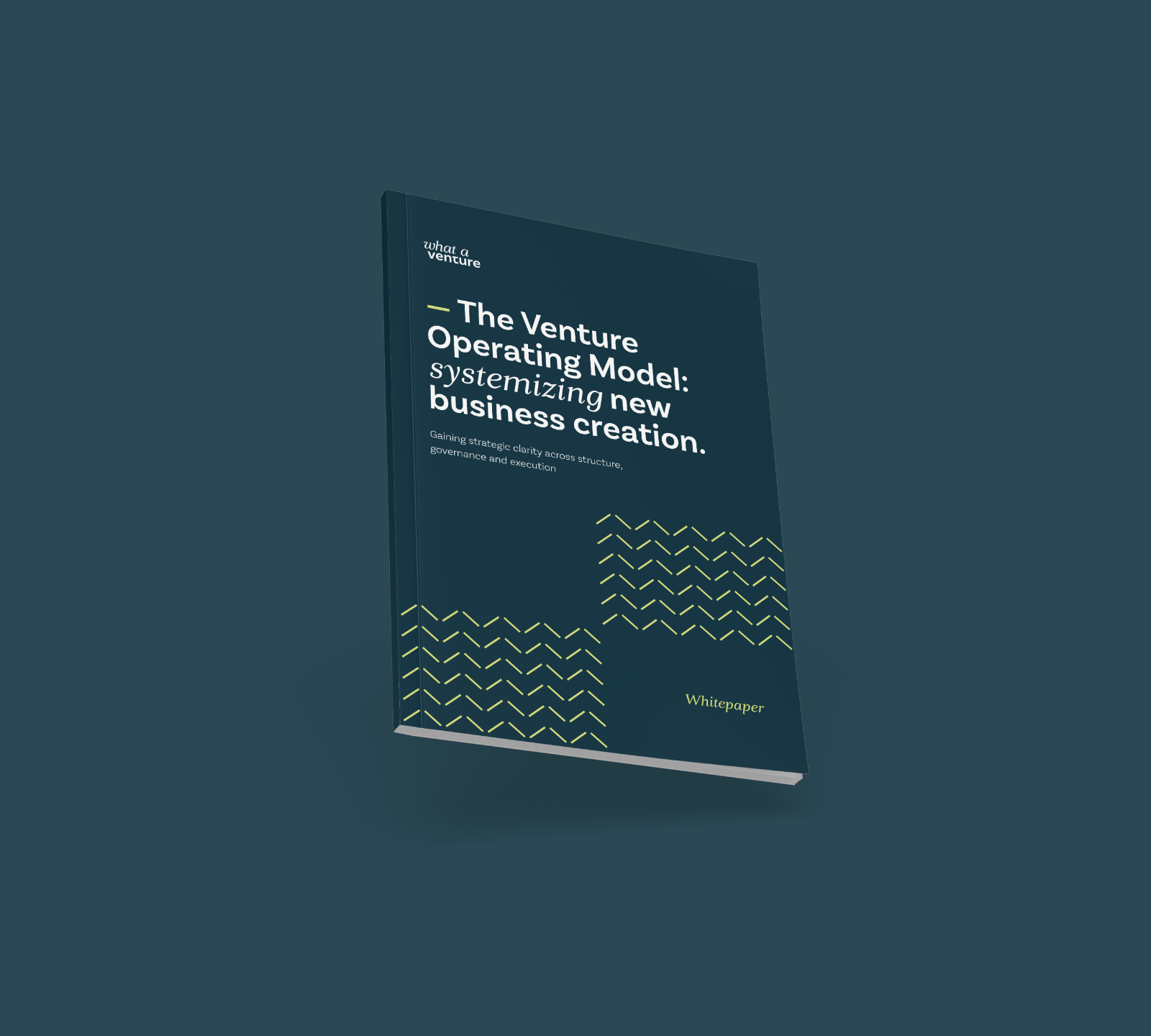
The state of corporate venture building 2025
Join our exclusive webinar on May 21st to get an early look at the main results from our upcoming study ‘The state of corporate venture building 2025’. Hear directly from the experts who led the study on how to build new business confidently.


Insights from 50 new business builders across DACH


.png)
.png)
.png)


.png)
.png)
.png)

.png)

What is it about?
Who is it for?
New business building during uncertainty requires four key factors
We are at a pivotal moment. As corporate venture building enters a more mature phase in the DACH region, one thing is clear: We are moving from bold experimentation to strategic necessity. The question is no longer whether to pursue venture building — but how to do so effectively in an increasingly volatile environment.
Drive resilient governance & executive commitment
Strong governance frameworks remain the foundation for corporate venture building (CVB) success. Top-level commitment is not just about visibility—it's about structured decision-making, resource confidence, and permission to experiment. Governance acts as the bridge between bold ideas and boardroom accountability and aids in balancing early wins with long-term commitment.
Implement smarter resource allocation with VC-style logic
Traditional funding models can no longer keep pace with venture dynamics. Instead, companies should embrace VC-style funding—stage-gated investments that allow informed decisions at each phase. This approach aligns risk appetite with real-world data, allowing organizations to invest incrementally, stay flexible, and know when to fold or double down.
Develop focused talent strategies
Effective venture building isn’t about hiring a static team—it’s about mobilizing the right capabilities at the right time. From seasoned venture architects during early validation to entrepreneurial leaders post product-market fit, the key is agile staffing that matches each venture's unique trajectory. Collaborating with external experts helps bridge gaps without long-term overhead.
Leverage adjacent innovation with an unfair advantage
Rather than chasing blue-sky disruption, leading CVBs will be homing in on adjacent opportunities where corporate assets provide a strategic edge. These ventures will move faster, track better, cost less, and benefit from existing infrastructure—maximizing the chances of scalable success.
Drive resilient governance & executive commitment
Strong governance frameworks remain the foundation for corporate venture building (CVB) success. Top-level commitment is not just about visibility—it's about structured decision-making, resource confidence, and permission to experiment. Governance acts as the bridge between bold ideas and boardroom accountability and aids in balancing early wins with long-term commitment.
Implement smarter resource allocation with VC-style logic
Traditional funding models can no longer keep pace with venture dynamics. Instead, companies should embrace VC-style funding—stage-gated investments that allow informed decisions at each phase. This approach aligns risk appetite with real-world data, allowing organizations to invest incrementally, stay flexible, and know when to fold or double down.
Develop focused talent strategies
Effective venture building isn’t about hiring a static team—it’s about mobilizing the right capabilities at the right time. From seasoned venture architects during early validation to entrepreneurial leaders post product-market fit, the key is agile staffing that matches each venture's unique trajectory. Collaborating with external experts helps bridge gaps without long-term overhead.
Leverage adjacent innovation with an unfair advantage
Rather than chasing blue-sky disruption, leading CVBs will be homing in on adjacent opportunities where corporate assets provide a strategic edge. These ventures will move faster, track better, cost less, and benefit from existing infrastructure—maximizing the chances of scalable success.
What you take away from the whitepaper
- Why corporate venture building matters now
- Exclusive data from 50+ industry leaders
- Real-world lessons from corporate innovators
- Hands-on strategies to strengthen your venture capabilities
Register for early access now
Download the paper now
Register to join the webinar — early access to the study included!
Don't forget to mark the webinar in your calendar.
Key numbers
67%
of participants believe new business building will contribute significantly to their company's growth and stability over the next 5 years
39%
of corporate venture building users report their resources decreased in the past 12 months
55%
of less successful new business builders name strategic direction as their top struggle
82%
of participants who face challenges in ideation struggle more with identifying strategically aligned opportunites - not generating volume.
The expertise behind this publication

Stefan Peintner
CEO & Managing Partner
With over fifteen years of international experience in strategy and innovation, Stefan advises corporates on setting up effective structures to systematically build new business. He brings an entrepreneurial mindset, a deep understanding of the corporate world, and broad cross-industry expertise - enabling him to effectively drive the validation and launch of new business.

Karyna Hornostai
Lead Venture Architect & Chief of Staff
Karyna thrives at the intersection of startups and corporates, turning big ideas into real businesses. For the past six years at whataventure, she has helped Europe’s leading companies shape ventures from first concept to MVP and market launch. With roots in startup and AIESEC leadership scene, she’s known for aligning stakeholders, simplifying complexity, and fuelling ventures with entrepreneurial drive, sales flair, and passion for sustainable impact.

Rebecca Van Pamel
Senior Venture Architect
Rebecca brings extensive experience working at the intersection between startups and corporates. Having spent years driving the international scaling of tech startups and scaleups in the telecom industry and beyond, she has powered the large-scale innovation of corporate partners through venture clienting. Rebecca aims to multiply success in the DACH market through hands-on support of high-potential ventures, leveraging her relentless can-do spirit for collaboration.