


Corporate venturing is no longer just a buzzword. For many organisations, it is a business-critical lever to create future revenue streams, explore new markets, and stay relevant.
At whataventure, we have worked with dozens of corporate venturing teams across industries. What we kept seeing: great intentions, unclear direction. Passionate people, stuck in the wrong structures. Ideas with potential, held back by vague governance or lack of real commitment.
Based on these experiences, we built and applied the Venture Operating Model to bring structure, clarity and confidence to your venturing efforts.
Done right, venturing follows a clear strategy and a well-defined venture operating model
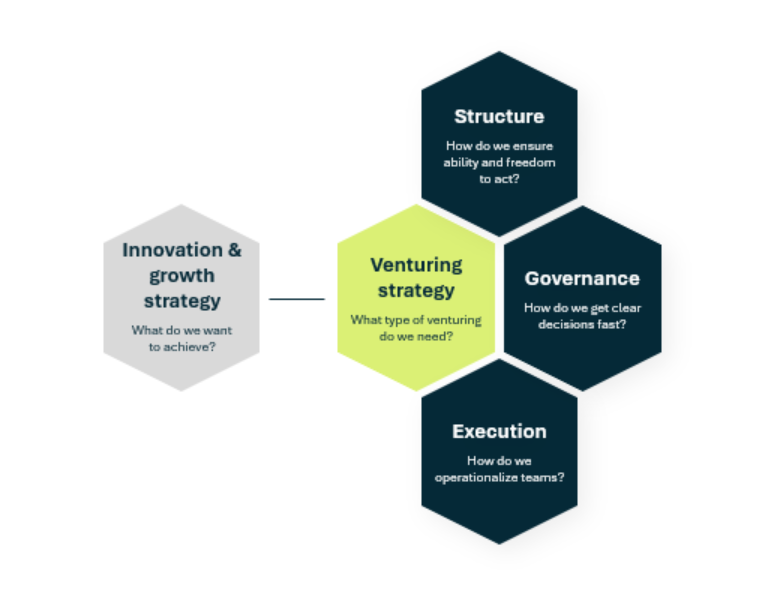
The Venture Operating Model is built around four essential elements: Strategy, Structure, Governance, and Execution. Together, they help move venturing from vague ambition to repeatable success.
4 building blocks of the Venture Operating Model
1. Strategy
Venturing only creates value if it supports the broader business. That means aligning with the corporate growth and innovation strategy and defining where and why to play. We move from generic “innovation” to clearly defined search fields: areas where the board sees future growth and is ready to commit.
2. Structure
Ventures don’t grow in PowerPoint decks. They need the right setup. Including where the team sits, what autonomy they have, and how resources are allocated. A good structure balances freedom with access to corporate assets. It enables ventures to move fast, without losing sight of scale and relevance.
3. Governance
Fast decisions, clear mandates, and the ability to say no, is what a functioning governance enables. It is the difference between moving with confidence and getting stuck in internal politics. We define how ventures progress through gates, who decides what, and what evidence is needed at each stage.
4. Execution
Finally, execution is about turning plans into progress. That means a functioning venture funnel, the right team, a strong culture, and portfolio-level visibility. It is where strategy meets reality and where many initiatives falter if the first three building blocks are not in place.
Commitment is more than a slide in a strategy deck
One of the biggest pitfalls in venturing? Making it look like a priority on paper, while quietly starving it of capital, talent, or time.
We have seen this play out too often. Leadership teams approve the venturing strategy, but then hesitate when it comes to actual investment. Or they back a few initial projects, but without a clear understanding of the payback periods involved. Venture building, for example, doesn’t deliver returns in 12 months, but it can build substantial long-term revenue engines if given the right foundation.
That is why the Venture Operating Model pushes for clear upfront commitments. Not just vague support, but agreed budgets, defined roles, and realistic timeframes.
From innovation theatre to business-building system
The Venture Operating Model is not a magic fix. It won’t make bad ideas succeed or eliminate all risk. But it helps you build a system where good ideas get a real shot with the clarity, support and setup they need to go the distance.
Whether you are just getting started or looking to re-align your venturing unit: we have seen how much difference a clarity can make.
As a corporate leader, you need a system to align venturing structure, governance, and execution. Without one, you aren’t steering the ship – you are just plugging holes.
The Venture Operating Model: Systemizing new business creation
Gain strategic clarity across structure, governance, and execution with the Venture Operating Model. This framework ensures that venturing is rooted in strategic reasoning and systematically executed.

.png)


.jpg)